民俗与节日
中国文化中的顺时与常识理性
Living in harmony with the seasons and the rationality of common sense. Chinese festivals are deeply rooted in agrarian cycles rather than religious dogma.
核心甲骨文:时间的具象化
Oracle Bone Script: The Materialization of Time. Early Chinese characters reflect a physically grounded conception of time based on agricultural rhythms.

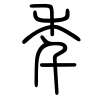
年 (nián)
Année / Récolte甲骨文上部为“禾”(成熟的谷物),下部为“人”,意为人背负着丰收的谷物。年本义为谷物成熟一次的周期。
The top part represents ripe grain (禾), and the bottom a person. A "year" conceptually began as the cycle of a single complete harvest.
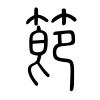
节 (jié)
Festival / Nœud本义指竹子的节点。引申为岁时气节转换的节点,即“节日”或“节气”。体现了中国时间观的阶段性与节奏感。
Originally meaning a bamboo "node", it extended to mean a node or transition in the flow of time, such as festivals and solar terms.
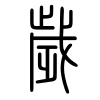
岁 (suì)
Âge / Année (Jupiter)原形为一种刃形兵器(收割工具)或与岁星(木星)十二年一周天相关。指收割的周期或岁星更迭,后指年龄。
Refers to either a harvesting tool cycle or Jupiter's 12-year orbital cycle, denoting age or a designated year.
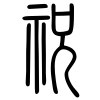
祝 (zhù)
Bénédiction象形为人跪在神主前祈祷。节日多起始于祭祀仪式。
Depicts a person kneeling before an altar praying. Many Chinese festivals find their origins in these ritual sacrifices.
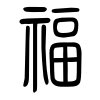
福 (fú)
Bonheur双手捧酒樽献祭于神主。祈求神明赐予富足与安康。
Hands offering a wine vessel at the altar. A prayer for prosperity and well-being, the core of Chinese blessings.
节日的农历基础:顺天应时
二十四节气 · Les 24 Periodes Solaires
中国传统节日深植于阴阳合历(Calendrier luni-solaire)与农业节律。古人将一年等分为二十四节气,每15天一个节点,精准对应农耕周期:什么时候播种、灌溉、收割、储藏。
Les fetes traditionnelles chinoises sont ancrees dans le calendrier luni-solaire. Les anciens divisaient l'annee en 24 periodes solaires (jieqi), espacees de 15 jours, correspondant precisement au cycle agricole : quand semer, irriguer, recolter, stocker.
The 24 Solar Terms (二十四节气) were inscribed on UNESCO's Intangible Cultural Heritage list in 2016. They represent one of humanity's most sophisticated pre-modern climate-tracking systems, dividing the solar year into 24 equal segments based on the sun's ecliptic longitude — accurate to within hours.四季节律 · La Cadence des Quatre Saisons
立春 · Lichun (4 fev)
清明 · Qingming (5 avr)
Semer, honorer les morts
端午 · Duanwu (5e mois)
夏至 · Xiazhi (21 jun)
Exorciser, proteger
中秋 · Zhongqiu (15e nuit)
重阳 · Chongyang (9e mois)
Remercier, honorer
冬至 · Dongzhi (22 dec)
除夕 · Chuxi (nuit finale)
Stocker, reunir la famille
天道即自然之理 · La Voie du Ciel = Raison Naturelle
葛兆光《中国思想史》指出:中国古代思想世界缺乏一个外在的、超越的创造神,"天道"(Voie du Ciel)即自然本身的规律。节日不是为了纪念神的奇迹,而是确认人与宇宙节奏的同步。这是与西方宗教节日最根本的区别。
Ge Zhaoguang (Histoire de la Pensee Chinoise) note que la pensee ancienne chinoise manque d'un Dieu createur transcendant externe. Le «Tiandao» (Voie du Ciel) est simplement la logique de la Nature elle-meme. Les fetes confirment la synchronisation de l'humanite avec le rythme cosmique — elles ne commemorent pas des miracles divins.
This is the defining difference: Christmas commemorates a divine birth event in linear time; the Spring Festival marks the return of Yang energy in cyclical time. Easter celebrates a resurrection; Qingming celebrates the return of life to the earth each spring. One narrative is historical; the other is meteorological.«L'unite du Ciel et de l'Homme» — le principe philosophique fondamental derriere tous les festivals chinois.
Every Chinese festival is a physical enactment of "Tian Ren He Yi" — the unity of Heaven and Humanity. When families gather at Mid-Autumn to gaze at the same full moon, they are not just celebrating — they are performing a ritual alignment of human emotions with a cosmic event. The festival IS the philosophy made tangible.
春节:岁始的更新与团聚
年兽神话与驱邪仪式 · Le Mythe du Nian et l'Exorcisme
传说中的"年"兽每年除夕夜出来伤人。人们发现它害怕三样东西:红色(春联、红灯笼)、火光(鞭炮)、响声(锣鼓)。这三种驱邪手段成为春节最标志性的视觉与听觉符号,其本质是驱阴迎阳——将冬季的黑暗能量转化为春季的生机。
La legende raconte que le monstre «Nian» sortait chaque veille du Nouvel An pour attaquer les gens. On decouvrit qu'il craignait trois choses : le rouge (banderoles, lanternes), le feu (petards), le bruit (gongs, tambours). Ces trois symboles iconiques exorcisent le Yin hivernal pour inviter le Yang printanier.
The Nian myth encodes a real agricultural logic: the "monster" is winter itself — cold, darkness, crop failure, disease. Red (Yang color), fire (warmth), and noise (life) are the antidotes. The ritual is a collective psychodrama of the community defeating winter. This is "common sense rationality" (常识理性) made festive.春节习俗全图 · Panorama des Coutumes
Enveloppe rouge avec argent pour les enfants. Rouge = Yang/chance. Digital red envelopes (微信红包 WeChat Hongbao) sent 46 billion times on New Year's Eve 2016 alone.
Couplets sur papier rouge colles sur la porte. Calligraphie de voeux. Developed from "peachwood charms" (桃符) hung at doors since the Zhou dynasty to ward off evil spirits.
Raviolis en forme de lingots d'or — manger de l'argent symboliquement. Sometimes a coin is hidden inside — whoever finds it will have good fortune all year. The shape mimics ancient gold/silver ingots (元宝 yuanbao).
Veiller toute la nuit de la Saint-Sylvestre — honorer le temps qui passe. "Guarding the year" — an act of reverence for time's passing and a prayer that the coming year be long and prosperous. The silence before midnight is as important as the explosion after.
宗法社会的最高仪式 · Rituel Supreme de la Societe Clanique
春节的核心是团圆(Reunion)。它在时间维度上连结三代:已故的祖先(祭祖)、当下的生者(聚餐)、未来的子孙(红包与祝福)。这是中国血缘社会(宗法制)最重要的社会凝聚仪式——一年一度确认家族成员资格与伦理秩序。
Le coeur de la Fete du Printemps est la reunion. Elle relie temporellement trois generations : ancetres defunts (culte), vivants presents (banquet), descendants futurs (hongbao et benedictions). C'est le rituel de cohesion sociale supreme de la societe clanique chinoise — reaffirmer chaque annee l'appartenance familiale et l'ordre ethique.
The Spring Festival migration (春运 Chunyun) is the world's largest annual human movement: 3+ billion trips made over 40 days as Chinese workers return home. It is the Confucian kinship bond made logistical — the obligation to return home (归 gui) is so deeply encoded that it overrides all economic cost.十五天的仪式结构 · Structure des 15 Jours
初一 — 拜神祭祖,长辈拜年
Jour 1 : Culte des dieux et ancetres, visites aux aines
初二 — 回娘家(妻子回娘家拜年)
Jour 2 : La femme mariee retourne chez ses parents
初五 — 迎财神,商店开张
Jour 5 : Accueil du Dieu de la richesse, reouverture des commerces
十五 — 元宵节,猜灯谜,吃汤圆
Jour 15 : Fete des Lanternes — enigmes et boulettes de riz glutineux
清明与端午:生死与驱疫的时序
清明节 · Qingming (Clarte Pure)
清明既是节气(4月4-6日,春分后第15天)也是节日。两种截然相反的活动在此刻奇妙融合:扫墓(祭死者)与踏青(赏生机)。杜牧诗「清明时节雨纷纷,路上行人欲断魂」道尽这种悲喜交织的独特氛围。
Qingming est a la fois periode solaire (4-6 avril) et fete nationale. Deux activites opposees s'y fusionnent : balayage des tombes (honorer les morts) et promenade printaniere (celebrer le retour de la vie). Poeme de Du Mu : «Pluie battante au Qingming / Les voyageurs sur la route ont l'ame brisee.»
The Qingming paradox: on the same day, families visit graves AND fly kites, have picnics, and plant willow branches. Life and death are not opposites in Chinese thought — they are phases of the same cycle. The dead are fed (paper money burned, food offered); the living are renewed (fresh air, new growth). Death fertilizes life.清明习俗 · Coutumes de Qingming
Nettoyer les tombes, offrir nourriture et brûler de la monnaie funeraire
Sorties champetres, cerfs-volants, plantation de saules
Bruler billets et vetements en papier pour les ancetres
Boulettes de riz gluant a l'absinthe — verdeur du printemps
端午节 · Duanwu — La Sante Communautaire
农历五月初五,仲夏湿热之际,"五毒"(蛇、蜈蚣、蝎子、壁虎、蟾蜍)活跃,疫病多发。端午本质上是一场集体公共卫生仪式:悬挂艾草菖蒲(天然驱虫)、饮雄黄酒(杀菌)、赛龙舟(祭水神镇邪),每个习俗都有其实用的生态逻辑。
Le 5e jour du 5e mois lunaire, en plein ete humide, les «cinq venimeux» (serpents, mille-pattes, scorpions...) proliferent et les epidemies eclatent. Duanwu est essentiellement un rituel d'hygiene publique collective : herbes medicinales (artemisia) pour repousser les insectes, vin de realgar (antibacterien), courses de bateaux-dragons pour apaiser les dieux de l'eau.
Modern pharmacology confirms: artemisia (艾草) contains artemisinin, now the world's most effective anti-malarial compound. Calamus (菖蒲) contains beta-asarone, a proven insecticide. Ancient Chinese "superstition" was actually empirical folk medicine refined over millennia of trial and error during the most disease-prone season.屈原:政治忠诚的文学化 · Qu Yuan
后世将端午与诗人屈原(343–278 BCE)殉国投江相关联,赋予了这个卫生节日以深厚的儒家伦理色彩:忠君爱国、不事二主。粽子据说是百姓为防止鱼虾啃食屈原遗体而投入水中的食物。这是中国文化将历史人物附会到节日以增加其道德权威的典型案例。
La legende associa plus tard Duanwu au suicide du poete Qu Yuan (343-278 av.J.-C.), noye pour protester contre la corruption. Les zongzi (riz glutineux en feuilles de bambou) etaient lances dans la riviere pour proteger son corps des poissons. Cas typique de la culture chinoise attachant un personnage historique a une fete pour renforcer son autorite morale.
Qu Yuan was the author of the "Li Sao" (离骚, "Encountering Sorrow"), one of the most influential poems in Chinese literature. His drowning in the Miluo River after his king rejected his loyal counsel became the prototype of the Confucian-Daoist tension: moral integrity vs. political reality. Duanwu thus commemorates not just his death but the eternal dilemma of the loyal intellectual.中秋节:月亮、秋收与圆满
圆月的哲学 · La Philosophie de la Pleine Lune
农历八月十五,秋分前后,月亮最圆最亮。"月圆"(Yue yuan)在中文中与"团圆"(Tuan yuan,reunion familiale)谐音,这种语音联想将天文现象直接转化为家族伦理的象征。苏轼「但愿人长久,千里共婵娟」——无论相隔多远,望同一轮明月即是心灵的相聚。
Le 15e jour du 8e mois lunaire, la lune est au maximum de sa plenitude et luminosite. En chinois, «lune ronde» (月圆 yue yuan) est presque homophone de «reunion familiale» (团圆 tuan yuan) — association phonetique transformant un phenomene astronomique en symbole ethique familial. Su Shi : «Puisse notre vie etre longue, pour partager la beaute de la lune a mille lieues.»
The phonetic link between 月圆 (moon-round) and 团圆 (reunion) is not coincidence — it is the Chinese poetic mind at work, finding cosmic confirmation for human values in natural phenomena. The full moon doesn't just represent reunion; in Chinese culture, it actively creates reunion by giving the separated a shared emotional experience.嫦娥神话 · Le Mythe de Chang'e
月宫神话:嫦娥(Chang'e)误服不死药飞升月宫,永远与丈夫后羿分离,只有玉兔(Jade Rabbit)相伴。这个神话将中秋月的物理孤独感(月如此近却无法触及)转化为中国文化中最普遍的情感:团聚之渴望与分离之痛苦。嫦娥也是首位中国月球探测器(2007–)的命名来源。
Le mythe de Chang'e : elle avala par accident le elixir d'immortalite et s'envola vers la lune, separee pour toujours de son mari Houyi, seule avec le Lapin de Jade. Ce mythe encode la caracteristique emotionnelle centrale de la lune chinoise : desir de reunion face a la douleur de la separation. Chang'e est aussi le nom des sondes lunaires chinoises (depuis 2007).
The Chang'e myth is unique: she is neither punished (she made a mistake) nor heroic (she fled) — she is simply alone, beautiful, and unreachable, like the moon itself. China named its lunar exploration program after her — a perfect choice: a civilization reaching toward the moon it has always longed for.秋报:农业感恩仪式 · Action de Grace Agricole
中秋源于古代"秋报"仪式——丰收后对自然与土地神的感谢祭祀。这与西方感恩节(Thanksgiving)有结构上的相似性,但区别在于:西方感恩是向神祈祷,中国感恩是向自然回馈。月饼(Gateaux de Lune)起初是祭月的供品,后演变为馈赠礼物,其圆形正是"圆满"的具象。
Le festival trouve son origine dans les anciens rituels de «moisson d'automne» (秋报) — sacrifices de remerciement a la nature et aux dieux de la terre apres la recolte. Similaire structurellement au Thanksgiving, mais difference cle : l'Occident prie Dieu, la Chine rend grace a la Nature. Les gateaux de lune etaient initialement des offrandes sacrificielles; leur forme ronde incarne la «plenitude» (圆满).
Mooncake varieties reveal China's regional diversity: Cantonese (lotus paste + salted egg), Suzhou (flaky pastry, savory), Beijing (5-kernel nut), Yunnan (ham). Modern innovations include ice cream mooncakes and "snowskin" varieties. In 2019, China exported 71,000 tons of mooncakes — the gift economy of harvest gratitude scaled to global trade.«Lever la tete, voir la lune brillante / Baisser la tete, penser a mon village natal.» — Li Bai
Li Bai's most famous two lines (from "Quiet Night Thoughts," 静夜思). Written c. 726 CE, they are still the most memorized poem in China today. The moon is the Wi-Fi connecting the exile to home. The downward gaze after looking up — the shame and longing of absence — is enacted physically by anyone who reads this poem aloud.
生命礼仪:出生与成年
满月与抓周 · Le Premier Mois et Zhuazhou
婴儿出生后一个月庆祝"满月"(Premier mois plein),剃胎毛、宴请亲友。一岁庆"周岁"时行"抓周"(Zhuazhou)仪式:将多种物品(书本、算盘、钱币、毛笔、尺子、印章等)摆于婴儿面前,让其自由抓取,以此"预测"其未来志向与职业。
Au bout d'un mois, le «Plein Mois» (满月) : rasage des premiers cheveux, banquet. A un an, le «Zhuazhou» : on dispose devant l'enfant divers objets (livres, boulier, pieces, pinceau, regle...) et son premier choix «predira» sa vocation — fonctionnaire, marchand, lettré, medecin.
The Zhuazhou objects are deeply revealing of Chinese values: a book (literary official), abacus (merchant), ruler (craftsman/architect), ink brush (scholar-artist), money (businessman), medical tools (doctor). Notably absent: weapons (military is not the highest aspiration), and religious items. The Confucian civilian hierarchy is encoded in the choice of objects.生命礼仪的儒家功能 · Fonction Confuceenne
这些仪式体现了中国家长对子女的现世期许(读书做官或经商发财),而非灵魂得救(salut de l'ame)。孩子从降生那刻起便被纳入宗法伦理秩序——有辈分(辈字取名)、有家族(宗谱登记)、有期望(功名富贵)。这是纯粹的此世性(ce-mondisme):所有仪式指向的都是现实世界的成功。
Ces rites refletent les aspirations seculieres des parents (reussite aux examens ou richesse commerciale) plutot que le salut spiritual. Des sa naissance, l'enfant est integre dans l'ordre clanique : generation genealogique (nom de generation), clan (registre ancestral), attentes (gloire et richesse). Pur ce-mondisme : tous les rituels visent le succes dans ce monde, pas l'au-dela.
Compare with Catholic baptism: both ceremonies formally integrate a newborn into a community. But baptism saves the soul for eternity; the Chinese birth rites secure the child's place in the living social order. One is vertical (human → God); the other is horizontal (individual → family → clan → society). Two entirely different axes of meaning.冠礼与笄礼 · Rites du Bonnet (Guan) et de l'Epingle (Ji)
《礼记》规定:男子二十岁行"冠礼"(赐以成人之冠帽,获字号),女子十五岁行"笄礼"(束发插笄,获字号),标志着从"童蒙"(enfant sans role social)到"成人"(personne sociale pleinement responsable)的转化。
这与儒家最核心的观念一致:人不是天生就是"人"的,成为"人"是一个经由礼教而完成的社会建构过程。仪式的本质是将自然生命转化为社会生命。
Le Liji prescrit : cérémonie du bonnet pour garcons a 20 ans (attribution d'un nom de courtoisie, acces au mariage et aux affaires), epingle pour filles a 15 ans. Philosophie cle : l'etre humain ne nait pas «humain» — le devenir est un processus de construction sociale par les rites. La nature devient culture.
The Guan Li (capping ceremony) closely resembles European knighting rituals — both formally confer adult social status with physical objects (cap vs. sword). But the Chinese version emphasizes civil, scholarly responsibility (学而优则仕 — study well, then serve the state), not martial prowess. The cap vs. the sword: two civilizations' visions of what adulthood means.«L'homme, dans sa vie, ne peut se passer de la communaute.» — Xunzi, Wangzhi
Xunzi's foundational Confucian insight: humans are inherently social beings. Rites of passage are not decorative — they are the mechanism by which isolated biological beings are transformed into social persons with roles, obligations, and belonging. Without ritual, there is no civilization.
生命礼仪:婚姻与丧葬
婚姻:合二姓之好 · Unir Deux Lignees
传统中国婚礼的本质是:「合二姓之好,上以事宗庙,下以继后世」(《礼记·昏义》)。这明确表达了婚姻不是个人情感的选择,而是家族政治联盟(alliance des clans)与血脉延续(perpetuation du lignage)的工具。"父母之命,媒妁之言"(ordre des parents, paroles de la marieuse)是传统婚姻合法性的来源。
Selon le Liji : «unir deux noms de famille, servir les ancetres en haut, assurer la descendance en bas.» Le mariage n'est pas un choix romantique individuel — c'est une alliance politique entre clans et un mecanisme de perpetuation du lignage. La legitimite vient des «ordres des parents et des mots de la marieuse» (父母之命媒妁之言).
Traditional Chinese marriage is structurally closer to a business merger than a romantic partnership. The "Six Rites" (六礼 Liuli) were: proposal (纳采), name-inquiry (问名), auspice-taking (纳吉), gift-sending (纳征), date-setting (请期), and finally reception (亲迎). Love might develop after marriage; it was not a prerequisite. This is the opposite of the Western Romantic ideal which developed in 12th-century troubadour culture.婚礼六礼 · Les Six Rites du Mariage
Demande en mariage : envoi d'un entremetteuse avec cadeaux
Signe astrologique : verification de la compatibilite des dates de naissance
Auspices, dot, date, cortege nuptial — l'escalade rituelle de l'engagement
拜天地(Se prosterner devant le Ciel et la Terre)确认了婚姻的宇宙合法性——天地是见证人,不只是长辈。
The "bowing to Heaven and Earth" (拜天地) during the wedding ceremony is philosophically profound: the union is witnessed not by God (as in church weddings) but by the cosmos itself. Heaven and Earth (Yin-Yang, the primal couple) bless the new human couple. Marriage is a microcosm of the cosmic order.丧葬:事死如事生 · Servir les Morts comme les Vivants
儒家「慎终追远」(《论语·学而》):谨慎对待生命的终结,追思遥远的祖先。厚葬与守孝三年(守孝制度)是孝道的终极体现。关键哲学:死者并未离开世界的秩序,而是进入了祖先行列(pantheon des ancetres),依然对生者施加影响与庇护——祖先可以保佑家族,也可以因不满而降祸。
Le confucianisme prescrit «traiter prudemment la fin et honorer les ancetres lointains». Le deuil de trois ans et les funerailles elaborees sont l'expression ultime de la Piete Filiale. Philosophie cle : le defunt n'a pas quitte l'ordre du monde — il rejoint le pantheon des ancetres, protegeant et influencant toujours les vivants (bienveillance ou malveillance selon les offrandes recues).
Ancestor worship is not "praying to the dead" — it is maintaining a relationship with them. Ancestors are fed (offerings at the grave/altar), consulted (divination), and thanked (reports of family news). They remain active participants in family life. This creates an extended family that spans death — the Confucian social network operates across the boundary of mortality.中西丧葬对比 · Comparaison des Funerailles
灵魂上天堂 / L'ame monte
一次性仪式 / Rituel ponctuel
安息 / Le repos eternel
L'au-dela comme destination finale
祖先保佑家族 / Protection clanique
周期性祭祀 / Rituels cycliques
继续参与 / Participation continue
L'au-dela comme extension sociale
民俗与常识理性:驱鬼·祈福·神的契约
实用主义的信仰体系 · Pragmatisme Religieux
葛兆光《中国思想史》指出,中国民间信仰具有高度的实用性与包容性("常识理性")。所谓"信则有,不信则无"——神的存在取决于信仰者的实用需求。这是一种此世的宗教:不关心彼岸世界(Paradis),只关心现世福祉(福·禄·寿:Bonheur·Prosperite·Longevite)。
Ge Zhaoguang note le pragmatisme radical des croyances populaires : «Si on croit, ca existe ; sinon, non.» C'est une religion de ce monde : elle ne cherche pas le Paradis mais les trois benedictions terrestres — Bonheur (福), Prosperite (禄), Longevite (寿). Les dieux sont des fonctionnaires cosmiques, pas des entites transcendantes.
The Chinese folk religious market is remarkably efficient: if a deity doesn't deliver results, worshippers simply switch to another. Temple statues of "effective gods" (灵验 lingyàn) become tourist destinations; ineffective ones are neglected. This is religious capitalism: supply and demand applied to the supernatural. The divine must prove its worth.民间神明体系 · Le Pantheon Populaire
Dieu de la richesse — accueilli le 5e jour du NAN pour benedicr le commerce
Dieux des portes — protegers contre les mauvais esprits
Dieu de la cuisine — «soudoye» avec du sucre avant de rapporter a l'Empereur de Jade
Roi Dragon — regit l'eau et la pluie ; prie par les agriculteurs
「敬鬼神而远之」· Respecter les Esprits, Sans s'en Approcher
儒家孔子的态度深深塑造了中国人的神鬼观。孔子"敬鬼神而远之"(《论语·雍也》)——承认鬼神的存在,但不让它们干扰理性的现世生活。这形成了中国独特的世俗契约型神学:人与神的关系是一种实用的交换,而非绝对的依附与敬畏。
L'attitude de Confucius a profondement facon le rapport aux divinites : «Respecter les esprits et s'en tenir eloigne» — les reconnaitre sans les laisser perturber la vie rationnelle. Cela cree une theologie contractuelle seculiere : la relation humain-dieu est un echange pratique, non une soumission absolue.
"Respect the spirits but keep them at a distance." This Confucian distance from the supernatural is the philosophical basis for Chinese pragmatic religion. Compare with Pascal's Wager (bet on God to avoid infinite loss) — the Chinese approach is the opposite: interact with gods only when practically necessary, and don't over-invest emotionally. It's spiritual risk management.灶神故事:可贿赂的神明 · Le Dieu Corruptible
腊月二十三"祭灶"(Sacrifice au Dieu de la cuisine)是最典型的案例:家人用糖果(麦芽糖)粘住灶神的嘴,让他上天向玉皇大帝汇报时只说好话,或说不出话来。这种"贿赂神明"的逻辑将神明完全拟人化与官僚化——神是可以被腐败的,人可以通过礼物影响神明的报告。
Le 23e jour du 12e mois : on offre des bonbons collants au Dieu de la cuisine pour coller sa bouche — qu'il ne rapporte que de bonnes choses a l'Empereur de Jade. Cette logique de «pot-de-vin divin» anthropomorphise et bureaucratise le divin : les dieux sont corruptibles, comme les fonctionnaires humains.
The Kitchen God myth is a masterpiece of Chinese religious pragmatism. The divine bureaucracy mirrors the earthly one — reports go up the hierarchy, bribes influence the report, the Emperor (Jade) makes decisions based on reports. Heaven is an imperial court. The gods are civil servants. Religion is political science by other means.汉法文化镜像:自然节律 vs 宗教叙事
📍 法国(西方)· Temps Lineaire Chretien
以宗教救赎事件锚定时间。 西方传统节日(圣诞节·复活节·诸圣节·升天节)全部围绕基督教救赎史(史诗线性时间)展开:时间从创世(Genesis)走向末日(Apocalypse)。节日是对历史神圣事件的周年纪念:圣诞=基督降生,复活节=基督复活,降临节=等待末日审判。
Les fetes occidentales (Noel, Paques, Toussaint, Pentecote) gravitent autour de l'histoire du salut chretien (temps lineaire epique) : le temps va de la Creation au Jugement Dernier. Chaque fete commemore un evenement divin historique unique : Noel = Incarnation, Paques = Resurrection, Avent = attente du retour du Christ.
The Christian calendar is profoundly historical: it anchors time to specific events (the Nativity, the Crucifixion, Pentecost) that happened once and will never happen again. This creates an irreversible, purposeful time: history has a direction, a meaning, and an end. Chinese cyclical time has no such telos — the seasons return; there is no final harvest.节日对比词汇 · Vocabulaire Comparatif
Evenement divin
Salut de l'ame
Transcendance
Dieu createur
神圣历史事件
灵魂得救
超越界
创世神
Rythme naturel
Benediction terrestre
Ce-mondisme
Tiandao (Dao)
📍 中国 · Temps Cyclique Naturel
以自然节候锚定时间。 中国传统节日(春节·清明·端午·中秋·重阳)严格遵循自然界的阴阳流转与农业节气。时间是循环往复的(comme les saisons)。节日不纪念历史上的神圣奇迹,而是确认人与宇宙节奏的同步:冬去春来,永无终止。核心价值:重生·感恩自然·祭祖·世俗享乐,体现了中国文化高度的"此世性"。
Les fetes chinoises suivent strictement le cycle naturel Yin/Yang et les saisons agricoles. Le temps est cyclique — comme les saisons, il ne va nulle part : les fetes reviennent, la nature se renouvelle, le cycle continue. Valeurs centrales : renaissance, gratitude envers la nature, culte des ancetres et jouissances terrestres — la «ce-mondisme» (此世性) de la culture chinoise.
The deepest difference: Christians celebrate specific unrepeatable events (Christmas happened once in Bethlehem); Chinese celebrate repeatable natural rhythms (the Spring Festival returns every year because spring returns every year). One festival system has a narrative arc; the other has a perpetual cycle. One builds toward an end; the other celebrates the absence of an end.«Celui qui meurt sans disparaitre a la vraie longevite.» — Laozi, Tao Te Ching, Ch. 33
For Laozi, true immortality is not physical survival but continuing to influence and inspire after death — exactly what ancestor worship enacts. The ancestor who is still fed, consulted, and obeyed by descendants has not truly died. Chinese "immortality" is social continuity, not individual survival. It is entirely of this world.
第十一课总结 · Conclusion de la Lecon XI
① 节日 = 宇宙同步仪式 · Synchronisation Cosmique
中国传统节日的根本功能是将人类生活节奏与宇宙/自然节奏同步。二十四节气和农历共同构成了一个精密的人-自然时间界面。节日不是历史事件的纪念日,而是宇宙运转的人类响应仪式。
La fonction fondamentale des fetes chinoises : synchroniser le rythme humain avec le rythme cosmique/naturel. Les 24 periodes solaires et le calendrier lunaire forment une interface homme-nature precise. Les fetes ne commemorent pas des evenements historiques — ce sont des rituels de reponse humaine au mouvement cosmique.
This is the profound "common sense rationality" (常识理性) Ge Zhaoguang identifies: not irrational superstition, but a highly rational system for managing human life in alignment with agricultural realities, seasonal psychology, and social cohesion — all without requiring belief in the supernatural.③ 此世性 vs 彼岸性 · Ce-Mondisme vs Transcendance
中国民俗节日呈现出高度的此世性(ce-mondisme):所有仪式指向现实世界的成功(福禄寿),而非彼岸的灵魂救赎。这是中西文化最深层的分歧之一——中国文化是一种内在性(immanence)的文化,在宇宙秩序之内寻求意义;西方基督教文化是一种超越性(transcendance)文化,在宇宙秩序之外的神那里寻求意义。
Les fetes chinoises affichent un profond ce-mondisme : tous les rituels visent le succes dans ce monde (福禄寿), non le salut de l'ame. C'est l'une des divergences les plus profondes : la culture chinoise est une culture de l'immanence (chercher le sens dans l'ordre cosmique lui-meme) ; la culture chretienne est une culture de la transcendance (chercher le sens dans un Dieu hors de l'ordre cosmique).
Max Weber identified this in "The Religion of China" (1915): Chinese religion lacks the "disenchantment" trajectory of Protestant Christianity. The world remains enchanted, but the enchantment serves this-worldly goals. There is no sharp sacred/profane divide — the Kitchen God is both mundane and cosmic, the grandfather's tomb is both a graveside and a communication portal.② 生命礼仪 = 社会建构 · Construction Sociale
冠婚丧祭等生命礼仪将自然生命纳入宗法伦理秩序:出生→抓周预测社会功能;成年→冠礼赋予社会角色;婚姻→连结两个家族血脉;死亡→加入祖先行列持续影响。整个人的一生是一条从自然人到社会人的不断礼仪化(ritualisation)的过程。
Les rites de passage (naissance, majorite, mariage, mort) integrent la vie biologique dans l'ordre ethique clanique : naissance → Zhuazhou predit le role social ; majorite → le bonnet confere le role social ; mariage → unit deux lignees ; mort → integration dans le pantheon ancestral. La vie entiere est un processus de ritualisation progressive de la personne naturelle en personne sociale.
Xunzi's insight applied to rites of passage: humans are the only animals who transform biological events (birth, puberty, reproduction, death) into social ceremonies. Each rite is a "social operating system update" — installing new roles, obligations, and identities into the individual. Without ritual, there is only nature; with ritual, there is civilization.④ 常识理性 · La Rationalite du Sens Commun
葛兆光提出的"常识理性"是理解中国民俗最关键的概念:不同于西方宗教的绝对神学信条,也不同于现代科学的实证主义,中国民俗中的神鬼崇拜遵循的是一种实用逻辑——有用的就信,没用的就换;可以谈判的神,可以收买的鬼;节日如果不能带来现实利益就会逐渐消亡。
La «rationalite du sens commun» (常识理性) de Ge Zhaoguang est le concept cle pour comprendre le folklore chinois : ni dogme theologique absolu ni positivisme scientifique, mais une logique pragmatique — croire ce qui est utile, changer ce qui ne marche pas ; des dieux negotiables, des fantomes corruptibles ; des fetes qui perdurent si elles servent les besoins reels.
This pragmatic rationality explains why Chinese folk religion has survived modernization better than many Western traditions: it never claimed to be metaphysically true, only practically useful. When artemisia was shown to contain anti-malarial compounds, Duanwu was vindicated by science. When firecrackers became legal nuisances, WeChat red envelopes replaced them. The form changes; the function persists.核心概念 · Concepts Cles · Key Concepts
节气 Jieqi
字面:时间的"节点"(竹节之义)。将太阳回归年分为二十四等份,每15天一个节点,精准对应农耕与季节转换。
«Noeuds du temps» (metaphore du bambou). Divise l'annee solaire en 24 periodes de 15 jours correspondant aux cycles agricoles. UNESCO 2016. The 24 Solar Terms (二十四节气). UNESCO Intangible Heritage 2016. Each term marks a precise solar position — more accurate than the Gregorian calendar for agricultural purposes. Still used by Chinese farmers today.宗法制 Zongfazhi
字面:宗族法度制度。以血缘关系为核心的社会组织原则:同姓同祖为宗,宗族内按辈分确定权威与义务。春节是其年度凝聚仪式。
Systeme clanique patriarcal — organisation sociale basee sur la lignee de sang. Le Nouvel An Chinois en est le rituel de cohesion annuel supreme. The Patriarchal Clan System. The organizational backbone of Chinese society for 3,000 years. Blood lineage determines authority, inheritance, and obligation. The Spring Festival is its annual ritual renewal — 3+ billion trips home to confirm membership.慎终追远 Shen Zhong Zhui Yuan
字面:慎重对待生命的终结,追思遥远的祖先(孔子《论语·学而》)。儒家丧葬礼仪的核心原则,解释了中国厚葬风俗与守孝制度。
«Traiter prudemment la mort, honorer les ancetres lointains» — Confucius, Entretiens. Principe fondateur de la piete filiale funeraire chinoise. "Carefully attend the end; honor distant ancestors." Confucius's basis for elaborate funerary practices and 3-year mourning periods. The deceased remain participants in family life — they must be properly maintained or they will withdraw their protection.常识理性 Changshi Lixing
字面:普通人的日常理性(葛兆光术语)。指中国民间信仰的实用主义逻辑:信仰以现实功效为标准,神明可贿赂,仪式可替换,本质是此世利益的最大化。
«Rationalite du sens commun» (terme de Ge Zhaoguang) : pragmatisme des croyances populaires chinoises. Les dieux sont utiles ou remplaces. La foi sert les interets de ce monde. "Rationality of Common Sense" — Ge Zhaoguang's term for the pragmatic logic of Chinese folk belief. Not theological dogma, not scientific positivism — a practical wisdom that believes what works and discards what doesn't. The ultimate this-worldly religion.抓周 Zhuazhou
字面:抓(Saisir)+ 周(Premier anniversaire)。婴儿满一岁时,将多种代表职业的物品摆于面前,让其自由抓取以"预测"未来。实为父母对孩子现世前途的期望仪式。
«Saisir au premier anniversaire» : le bebe choisit parmi des objets symboliques (livre, boulier, pinceau...) pour «predire» sa vocation future. Rituel des aspirations seculieres parentales. The Zhuazhou ritual reveals Chinese secular values: the objects are books (scholar), abacus (merchant), ruler (craftsman), brush (artist). No weapons. No religious symbols. The Confucian civil hierarchy encoded in infant prophecy.此世性 Cishixing
字面:属于此世(这个世界)的属性。指中国文化对现实世界的根本肯定:意义在"此处"而非"彼岸",追求今生的福禄寿,而非来世的天堂与灵魂救赎。
«Ce-mondisme» : l'affirmation fondamentale de la culture chinoise que le sens reside ici, pas dans l'au-dela. Prosperite, longevite et bonheur terrestres plutot que salut de l'ame. "This-worldliness" — the defining characteristic of Chinese culture according to sociologist Max Weber and philosopher Tu Weiming. Meaning is found in this life, this family, this social role — not in a transcendent God or afterlife. The ultimate this-worldly civilization.