饮食文化
“民以食为天”的历史与哲学
核心甲骨文:口腹之欲的文字纪实

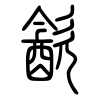
饮 (yin)
Boire / To Drink右边是一口酒坛(酉 you),左边是一个人俯身张口吐舌正在喝。"饮食"合称,说明喝与吃在中国文化中从不分离。
A droite : une jarre a vin (酉). A gauche : une personne penchee, bouche ouverte, langue sortie. Boire et manger (饮食) sont toujours nommes ensemble. Yin (饮): A person bending over a wine vessel, tongue extended to drink. The compound 饮食 (yinshi, "food and drink") is the single most fundamental phrase in Chinese culture — appearing in "民以食为天" and countless texts. The two acts are culturally inseparable.
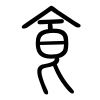
食 (shi)
Nourriture / Manger像一个盛满食物、带盖的食器(簋 gui)。本义为吃饭、粮食。"食"既是动词(吃)也是名词(食物),说明中文将"吃"与"食物"视为同一行为的两面。
Un recipient a nourriture (簋) avec couvercle, rempli d'aliments. 食 est a la fois verbe (manger) et nom (nourriture) — l'acte et l'objet fusionnes. Shi (食): A food vessel (gui 簋) with a lid, full. Uniquely, 食 functions as both noun ("food") and verb ("to eat") — the act and the object are the same word. In Western languages eating and food are separate concepts; in Chinese they share a root, reflecting the primacy of nourishment as lived experience.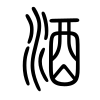
酒 (jiu)
Alcool / Vin de riz右为酒器"酉"(尖底陶坛),左侧加了"氵"水旁(滴落的酒液)。酒是中国最古老的祭祀媒介,也是文人"酒后吐真言"的创作催化剂(李白"斗酒诗百篇")。
Jarre pointue (酉) + eau (氵 = gouttes de liquide). Le vin de riz est le plus ancien medium sacrificiel chinois et le catalyseur poetique — Li Bai : «Un pichet de vin, cent poemes». Jiu (酒): Wine vessel + flowing liquid. Alcohol in China was never merely recreational — it was sacrificial (offered to ancestors), diplomatic (sealed alliances), and creative (Li Bai reportedly composed 100 poems per flask). The oracle bone form shows the fermentation vessel, predating written history.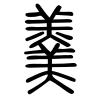
羹 (geng)
Soupe / Ragout rituel上为"羔"(小羊 gao),下为"鬲"(煮肉的三足锅 li)。本义即煮熟的羊肉浓汤。羹是先秦贵族宴飨的核心食物,也是政治和解的象征("一箪食,一瓢饮"的简朴 vs "食前方丈"的奢靡)。
Agneau (羔) + chaudron a trois pieds (鬲) = soupe d'agneau mijotee. Le geng etait le plat central des banquets aristocratiques pre-Qin et un symbole d'hospitalite politique. Geng (羹): Lamb + three-legged cauldron = slow-cooked mutton broth. The geng was the supreme banquet dish of Zhou aristocracy — offering it was a gesture of highest honor. The character encodes the entire cooking process: animal + vessel + fire. Food as social contract, written into a single ideograph.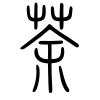
茶(荼) (cha)
The — L'Homme dans la Nature艹(草)+ 人 + 木:草木之间的人。这个字形完美诠释了"天人合一"。甲骨文时代无茶字,最初称"荼",唐代陆羽《茶经》中正式简化为"茶"。
Herbe (艹) + Homme (人) + Arbre (木) : l'homme entre les plantes. Structure ideographique parfaite pour «l'unite Ciel-Homme». Le mot 茶 fut fixe par Lu Yu au VIIIe siecle. Cha (茶): Grass/herb (艹) + person (人) + tree/wood (木) — a human being nestled between plant life. The character visually encodes the Daoist philosophy of human integration with nature. Its word form spread globally: "tea" (English), "the" (French), "thee" (Dutch) all derive from the Min Chinese pronunciation "te"; "chai" (Russian, Hindi) from the Mandarin "cha."饮食即哲学:"民以食为天"
此世性的生存逻辑 · La Logique Seculiere de la Survie
《汉书》言:「王者以民为天,而民以食为天」。在缺乏彼岸造物主信仰的中国文化里,"天"不是虚无缥缈的神国,而是现实的自然秩序与生存根本。填饱肚子是治国的第一要务——这种唯物主义的政治哲学贯穿中国三千年历史。
Le Livre des Han : «Le roi voit le peuple comme son Ciel ; le peuple voit la nourriture comme son Ciel.» Dans une culture sans createur transcendant, le «Ciel» est l'ordre naturel concret et la base materielle de la survie. Nourrir le peuple est la premiere obligation du gouvernement — philosophie politique materialiste de 3000 ans.
This phrase from the Book of Han (汉书) was the foundational principle of Chinese governance: legitimacy rests on feeding the population. Famines caused every major Chinese dynasty to collapse. Sun Yat-sen, Mao Zedong, and Deng Xiaoping all invoked this principle. "The people regard food as Heaven" is not a poetic metaphor — it is a political constitution in six characters.«La Voie (Dao) se trouve dans l'usage quotidien du peuple ordinaire.» — Wang Gen, Ming Dynasty
"The Way of the common people in their daily lives IS the Dao." Wang Gen's radical democratization of Confucian philosophy: the Dao is not in temples or scriptures, but in cooking, eating, sleeping, and working. The kitchen is as sacred as the scholar's study. This is Chinese philosophy's great secularization.
从"果腹"到"天理" · De la Satiete au Principe Celeste
葛兆光《中国思想史》强调,中国哲学最大特点是不脱离世俗生活。吃饭不仅是生物学本能,更是调和阴阳、顺应节气的修身养性过程。《黄帝内经》将食物按四气五味分类,使每一顿饭都成为一次身体调节的医疗行为。
Ge Zhaoguang souligne que la philosophie chinoise ne se detache jamais de la vie seculiere. Manger n'est pas qu'un instinct — c'est un processus de cultivation de soi harmonisant Yin-Yang et suivant les saisons. Le Huangdi Neijing classe les aliments selon leurs proprietes energetiques, faisant de chaque repas un acte medical prophylactique.
The contrast with Western dualism is stark: in Platonic and Christian traditions, the body's needs are suspect — food is necessity, potentially sinful excess. In Chinese thought, eating well IS virtue. Nourishing the body correctly is the foundation of moral cultivation (修身 xiushen). The sage emperor is also the ideal cook.孔子的饮食礼仪观 · La Vision Confuceenne de l'Etiquette Alimentaire
孔子《论语·乡党》对饮食礼仪有极细致的规定:「食不厌精,脍不厌细」(饭食不嫌精,肉食不嫌细)。同时规定:割不正不食、不时不食、色恶不食、臭恶不食。孔子是中国历史上第一位系统论述饮食礼仪的思想家,将餐桌行为纳入礼教规范的范畴。
Le chapitre Xianggong des Entretiens de Confucius detaille l'etiquette alimentaire : «On ne peut avoir trop de raffinement dans la nourriture, ni trop de finesse dans la decoupe.» Il prescrit aussi : ne pas manger ce qui n'est pas coupe correctement, pas de saison, de mauvaise couleur ou de mauvaise odeur. Confucius fut le premier a integrer la table dans le systeme rituel (li).
Confucius specified 10 conditions under which one should not eat. This was not food snobbery — it was a philosophy of mindfulness applied to eating. Each rule encodes a principle: correct cutting = respect for nature's order; seasonal eating = alignment with Heaven's rhythm; refusing bad-smelling food = cultivation of sensory discernment. The table is a training ground for virtue.八大菜系:地理气候与味觉密码
南甜北咸,东酸西辣 · Quatre Axes du Gout
呼应第7课(地理):中国广袤的地形和多样气候直接塑造了八大菜系(鲁、川、粤、闽、苏、浙、湘、徽)。"一方水土养一方人"——地理决定味觉,味觉决定性格。
Bassin humide : piment et poivre du Sichuan chassent l'humidite par la transpiration. La sensation d'engourdissement = bataille Yin-Yang. Sichuan pepper (花椒) causes "mala" — simultaneous numbness AND heat. This paradoxical sensation is the culinary embodiment of yin-yang tension.
Jiangnan, riche en produits aquatiques : cuisine douce, qui preserve la saveur originelle de l'ingredient (ben wei). Jiangnan cuisine values 本味 (ben wei, "original flavor") — the ingredient's natural taste is sacred. This reflects the Daoist principle that the best cooking conceals the cook.
Facade maritime : ingredients ultra-frais, cuisson minimale pour preserver la fraicheur. Dim sum comme culture de partage. Cantonese "fresh" (鲜) is sacred — a fish bought at 6am must be cooked by noon. The obsession with freshness reflects coastal ecology: abundant but perishable. Speed and minimal intervention preserve what nature provides.
Patrie de Confucius : cuisine salée, elaborate, codes d'etiquette stricts — la gastronomie comme rite confuceen. Shandong (Lu) cuisine is China's oldest formal culinary tradition, the basis of imperial court cuisine. As Confucius's homeland, its food etiquette is the most elaborate — dining IS ritual.
不时不食 · Le Terroir et la Saisonnalite
孔子名言:「不时不食」——不是当季的食物不吃。饮食是对天地之"气"(Qi cosmique)的最直接摄入。这与法国葡萄酒的 Terroir(风土) 理念高度契合:食物的本质由其生长的土地、气候与时节共同决定。
«On ne mange pas ce qui n'est pas de saison» — Confucius. L'alimentation est l'absorption directe du Qi cosmique. Cette philosophie de la saisonnalite et du lieu de production recoupe exactement le concept francais de Terroir en viticulture : la qualite est inextricable du sol, du climat et du moment.
The parallel between Chinese seasonal eating (不时不食) and French terroir philosophy is profound: both insist that quality is inseparable from context. A strawberry in December violates the same principle as a Grand Cru Bordeaux grapes grown in a greenhouse. "Right time, right place" — the Confucian and oenological wisdom converge.中国菜的全球影响 · L'Influence Mondiale
中餐是世界上分布最广的菜系。全球中餐馆数量估计超过60万家,遍布每个有华人聚居的城市。然而,大多数"中餐馆"提供的是高度本地化的变体(如"炒杂碎"是美国人发明的,"左宗棠鸡"在中国不存在)。这引出一个文化问题:离开地理语境的食物还是原来的食物吗?
La cuisine chinoise est la plus repandue au monde (600 000+ restaurants). Mais la plupart servent des variantes localisees : le «Chop Suey» fut invente aux Etats-Unis; le «General Tso's Chicken» n'existe pas en Chine. Question culturelle : une cuisine coupee de sa geographie est-elle encore elle-meme?
General Tso's Chicken was invented in New York by Taiwanese chef Peng Chang-kuei in the 1970s. Fortune cookies were invented in San Francisco around 1900 — they do not exist in China. The global "Chinese food" is a diaspora cuisine shaped by host-country ingredients and tastes — a living example of how culture transforms when transplanted.茶文化:从饮品到修行
陆羽与《茶经》 · Lu Yu et le «Classique du The»
唐代陆羽(733–804)撰写的《茶经》是世界上第一部系统性的茶叶专著,共三卷十章。他将茶从一种普通的解渴提神饮料升华为具有严密仪式感的美学体验。《茶经》规定了用水的等级:「山水上,江水中,井水下」——山泉水最佳,江河水次之,井水最差。这种对水质的极端考究,本质上是对"天地之气"纯粹度的追求。
Lu Yu (733-804) du Tang rediga le «Classique du The» (茶经) — premiere monographie systematique sur le the au monde, 3 volumes, 10 chapitres. Il eleva le the d'une boisson ordinaire a une experience esthetique rituelle. Il prescrit la qualite de l'eau : «Eau de montagne superieure, eau de riviere moyenne, eau de puits inferieure» — une quête de la purete du Qi cosmique.
The Chajing (茶经) influenced not just China but all of East Asia. Lu Yu was orphaned, raised by a Buddhist monk, exposed to Confucian classics, and deeply immersed in Daoist nature philosophy — his tea philosophy synthesizes all three. He tested water sources across China before ranking them. His top choice: a specific spring in Wuxi, Jiangsu. Second: the Yangzi River mid-current. The precision is scientific; the motivation is spiritual.茶的传播之路 · La Route du The vers le Monde
茶从中国向全球传播经历了两条路线:陆路(经茶马古道→西藏→中亚→俄罗斯:"Chai"的发音由此而来);海路(经荷兰东印度公司→欧洲,17世纪:"tea/the"的发音来自闽南语"te")。1839年,英国因中国限制茶叶贸易,派人秘密从中国盗取茶树种苗与制茶技术,种植于印度阿萨姆邦——这直接引发了鸦片战争的经济背景。
Le the se repandit via deux routes : terrestre (Route the-chevaux → Tibet → Asie Centrale → Russie : prononciation «Chai») ; maritime (Compagnie des Indes → Europe, XVIIe s. : prononciation «the/tea» du Min «te»). En 1839, la Grande-Bretagne envoya des espions voler des plants de the en Chine pour les cultiver en Inde — contexte economique direct de la Guerre de l'Opium.
Robert Fortune's 1848 theft of Chinese tea plants and production secrets for the British East India Company is one of history's greatest acts of industrial espionage. He disguised himself as a Chinese merchant, smuggled 20,000 plants and seedlings to India, and broke China's tea monopoly. The English afternoon tea tradition — so quintessentially "British" — exists only because of Chinese intellectual property theft.人在草木间 · L'Homme parmi les Herbes et les Arbres
茶(荼)的字形(艹+人+木)完美诠释了中国哲学的核心:人处于自然(草木)之间,既非自然的统治者(西方),也非自然的奴隶,而是其中的一部分——天人合一的视觉化编码。饮茶是一种让心灵从世俗喧嚣回归自然(自然 Ziran)的通道,是文人每日必行的道家修行。
L'etymologie de 茶 (herbe 艹 + homme 人 + arbre 木) illustre le coeur de la philosophie : l'homme n'est ni maitre ni esclave de la nature, mais sa partie integrante — encodage visuel de «l'unite Ciel-Homme». Boire le the est un passage du bruit mondain vers la Nature (Ziran) — la pratique taoiste quotidienne du lettré.
The tea ceremony (in both Chinese and Japanese forms) is a philosophical practice made physical. Each element has meaning: the rustic pottery (wabi — imperfection as aesthetic), the slow pouring (patience), the silence (non-action/wu wei), the bitter taste (reality without sweetness). The tea bowl is held with both hands — a gesture encoding humility and full presence. You cannot text while performing gongfu cha.«Le the est le noble arbre du Sud.» — Lu Yu, Classique du The, Chapitre 1, premiere phrase.
Lu Yu's opening line elevates tea from beverage to "noble tree of the South" — using the same character 嘉 (jia, excellent/noble) applied to virtuous people. The tree has moral character. This is not metaphor; Lu Yu genuinely believed the tea plant embodied natural virtue. Drinking it was communion with that virtue.
茶道精神:和、敬、清、寂
茶道四谛 · Les Quatre Principes du Cha Dao
人与茶、水、器的和谐共鸣。儒家"和而不同"的精神在茶席上的体现。
Harmonie entre l'homme, le the, l'eau et les ustensiles — «etre en harmonie sans etre identique» (Confucius).
对客人、茶叶和自然的尊重。以茶敬客是中国待客之道的精髓。
Respect envers l'invite, le the et la nature. Offrir le the est l'essence meme de l'hospitalite chinoise.
茶汤的清澈代表心灵的纯净。道家"清心寡欲"的物质化体现。
La clarte du the represente la purete de l'esprit — materialisation taoiste du «vider le coeur de ses desirs».
茶席的寂静是禅宗"空性"的入口。"茶禅一味":茶的苦涩即是生命的真谛。
Le silence de la ceremonie est l'entree vers le «Vide» bouddhiste Zen — «The et Zen ont la meme saveur»: l'amertume du the EST la verite de la vie.
儒释道的交融 · Fusion des Trois Philosophies
茶桌是一个微缩的思想道场:儒家借茶强调"礼"与人际之"和"(待客之道、长幼之序);道家借茶追求"清"与"无为"(不加糖、不加奶,保持茶的本味);佛家禅宗则有「茶禅一味」之说:在品茶的专注与苦涩中顿悟真理。
La table a the est un dojo philosophique miniature. Confucianisme : etiquette et harmonie sociale (priorite aux aines). Taoisme : purete et non-agir (pas de sucre, pas de lait — preserving la saveur originelle). Zen : «Le the et le Zen ont la meme saveur» — l'eveil par la concentration dans l'amertume.
The three philosophies manifest physically at the tea table: The Confucian pours for elders first (hierarchy); the Daoist refuses to mask the tea's natural flavor with sugar (nature unmodified); the Buddhist monk drinks slowly, completely present, finding the infinite in a small bowl (mindfulness). The same leaf, three entirely different intentions.酒 vs 茶 · Dionysien vs Apollinien
茶的冲泡过程是五行中水与火的平衡。尼采的区分在此有绝妙对应:酒代表狂热、失控、集体的迷醉(酒神精神/Dionysien——李白的诗酒人生);茶代表克制、清醒、个体的沉思(日神精神/Apollinien——苏轼、陆游的茶道人生)。中国传统士大夫以茶代酒,是从儒家义务向道家清修的精神转换仪式。
La preparation du the est l'equilibre Eau-Feu des Cinq Elements. Correspondance nietzscheenne : le vin = extase, perte de controle, ivresse collective (dionysien — Li Bai). Le the = retenue, lucidite, meditation individuelle (apollinien — Su Shi, Lu You). Substituer le the au vin est un rituel de transition spirituelle, de l'obligation confuceenne a la retraite taoiste.
This Apollonian/Dionysian split maps perfectly onto the Confucian-Daoist tension in Chinese culture. The wine drinker (Li Bai, the "Banished Immortal") embraces cosmic dissolution; the tea drinker (Su Shi in exile, Wang Wei in his mountain retreat) seeks precise, clear-eyed communion with nature. Both are legitimate paths — but only the tea drinker could maintain official duties. Tea is the philosopher's compromise.药食同源(上):阴阳与食物的能量极性
食物的"四气" · Les Quatre Natures Energetiques
中医理论认为「药食同源」——食物与药物有着相同的起源。食物不仅有营养,更具有独特的能量偏性:寒、凉、温、热四气。西方营养学计算卡路里和维生素;中国饮食体系计算能量的阴阳属性。
夏季食用,清热泻火
Haricot mungo, pasteque, concombre, crabe — dissipent la chaleur en ete
冬季食用,补阳驱寒
Agneau, gingembre, ail, jujube — tonifient le Yang en hiver
La medecine traditionnelle (MTC) postule que les aliments et les plantes medicinales ont la meme origine. Les aliments possedent 4 natures energetiques qui influencent l'equilibre Yin-Yang du corps — la nutrition comme pharmacologie preventive.
Modern research has partially vindicated this system: ginger (生姜) contains gingerols with proven anti-inflammatory effects; garlic (大蒜) has antibacterial allicin; watermelon (西瓜) has citrulline which dilates blood vessels and cools the body through increased circulation. The "warming/cooling" system is folk pharmacology with real biochemical correlates."治未病":预防即医疗 · Prevenir avant de Guerir
「上医治未病,中医治欲病,下医治已病」(《黄帝内经》):最高明的医生在疾病发生前就将其消除;次等的医生在疾病将发未发时治疗;下等的医生等到疾病已经发生才治疗。日常饮食就是最基础的预防医学:
羊肉+生姜+当归汤
Hiver: tonifier le Yang — soupe agneau-gingembre-angélique
绿豆汤+莲子百合粥
Ete: dissiper la chaleur — soupe haricot mungo, bouillie lotus-lis
韭菜+菠菜+春笋
Printemps: desobstruer le foie — ciboulette, epinards, pousses de bambou
梨+银耳+百合粥
Automne: humidifier les poumons — poire, champignon blanc, bouillie au lis
中西营养学对比 · Comparaison des Approches Nutritionnelles
蛋白质/碳水/脂肪
维生素/矿物质
分子成分分析
Approche analytique/moleculaire
四气五味
脏腑对应
整体能量平衡
Approche holistique/energetique
药食同源(下):五行·五味·五脏
五味入五脏 · Les 5 Saveurs Nourrissent les 5 Organes
基于《黄帝内经》的宇宙观,人是微观宇宙,五脏与五行、五味严密对应:
Vinaigre, citron, prune noire
Melon amer, the vert, coeur de lotus
Jujube rouge, igname, courge
Gingembre, ail, radis blanc
Algue kombu, soja noir, sel marin
「治大国若烹小鲜」· Gouverner comme Cuisiner
老子《道德经》第60章:「治大国若烹小鲜」——治理大国就像煎一条小鱼(动作要轻,不能频繁翻动破坏其形)。这句话将烹饪艺术与政治哲学完全等同,揭示了中国思想中厨师与政治家的同构关系。传说商朝宰相伊尹原本是厨师,以烹调之道说服商汤:最好的政治是调和各方,而非压制某一方。
Laozi (Tao Te Ching, Ch. 60) : «Gouverner un grand Etat, c'est comme cuire un petit poisson» — les gestes doux, sans exces d'intervention. La cuisine et la politique sont philosophiquement equivalentes en Chine. Yi Yin, Premier ministre des Shang, etait d'abord cuisinier : il convainquit le roi Tang par la metaphore culinaire que le meilleur gouvernement harmonise sans ecraser.
This metaphor has a direct parallel in modern political philosophy: Adam Smith's "invisible hand" governs like a good cook who doesn't over-stir the market; Deng Xiaoping's "crossing the river by feeling the stones" echoes the cook's caution. Barack Obama used the same Laozi quote in a speech. The kitchen as model of statecraft is one of China's most enduring and globally influential political metaphors.和谐(和)的烹饪法 · L'Art de l'Harmonie
中国顶级烹饪的本质不是突出某一种味道,而是让五味调和(平衡相生与相克)。这是中庸哲学(Doctrine du Juste Milieu)在味觉上的实践:每种味道都不能过强,需要相互制衡与补充。酸甜苦辣咸必须相互交织,产生"鲜"(umami,难以言传的鲜美感)——中国美食的最高境界。
L'essence de la haute cuisine chinoise n'est pas d'isoler une saveur, mais de les harmoniser toutes. Application pratique de la philosophie du Juste Milieu (中庸) : aucune saveur ne doit dominer les autres — equilibre generatif entre les cinq. La fusion parfaite produit le «Xian» (鲜) — l'umami inesplicable, la quintessence du gout chinois.
Xian (鲜) — Chinese umami — is the untranslatable fifth taste that emerges from perfect flavor harmony. The character itself is revealing: 鲜 = fish (鱼) + lamb (羊), the two most intensely savory proteins. This is the culinary embodiment of zhongyong: no single note dominates, the combination produces something greater than any part. Umami was only scientifically identified in Japan in 1908 — but Chinese cooks had been engineering it for 3,000 years.餐具的哲学:筷子 vs 刀叉
筷子:仁与柔 · Baguettes : Humanite et Douceur
儒家提出「君子远庖厨」——餐桌上不应出现刀剑等带有暴力切割意味的工具。筷子(双木——阴阳二合一)依靠杠杆原理,以挑、拨、夹的柔和动作取食,是以"心智"而非"蛮力"控制物质的象征。
长度相等(平等)
平行并用(协作)
Deux paires (Yin-Yang), egalite, cooperation
精确控制(不蛮力)
食物已处理好(厨艺在前)
Saisir sans briser, controle precis, la preparation est faite avant
Confucius : «Le gentilhomme se tient eloigne des abattoirs.» Les baguettes utilisent l'effet de levier pour saisir doucement — c'est le controle de la matiere par l'intelligence plutot que par la force brutale. La viande est decoupee en cuisine AVANT d'arriver a table : la violence est cachee, la convivialite est preservee.
Chopstick use requires the coordination of over 30 joints and 50 muscles in the arm and hand — more than any other utensil. Chinese research has linked early chopstick training to fine motor development. The preparation philosophy is key: in Chinese cooking, ALL cutting happens in the kitchen, before service. The table is a space of enjoyment, not of violence. The knife never appears.刀叉:笛卡尔式的分析与征服 · Couteau/Fourchette : Analyse Cartesienne
西方的刀叉意味着在进餐时继续进行切割、分解的动作——这是对食物的直接干预和二次分析。这也体现了笛卡尔式思维(分析=解构=切割)在餐桌上的延伸:将整体化简为可处理的部分。叉子固定,刀划开——这是手术刀的逻辑,不是共享的逻辑。
Le couteau et la fourchette occidentaux impliquent une action continue de couper et diviser pendant le repas — intervention directe et analyse de la matiere. Reflet de la pensee cartesienne (analyser = deconstruire = couper) a table : reduire le tout en parties gerable. La fourchette fixe, le couteau decoupe — logique du scalpel, non du partage.
The knife's presence at the Western table has a history: medieval European diners brought their own knives. The table fork appeared only in the 11th century (imported from Byzantium). Etiquette rules for knife use (never point at another person, blade inward when resting) developed because knives ARE weapons at table. Chinese table culture solved this problem differently: remove the weapon from the dining space entirely.筷子礼仪禁忌 · Tabous des Baguettes
❌ 竖插于饭碗——形似祭祀时的香烛(死亡禁忌)
Ne jamais planter les baguettes verticalement dans le riz — ressemble aux batonnets d'encens funeraires (tabou mortuaire)
❌ 用筷子指人——极不礼貌(同刀指人等同)
Ne jamais pointer quelqu'un avec les baguettes — equivalent de pointer un couteau
❌ 筷子长短不一地拿——俗称"三长两短",不吉利
Ne pas tenir des baguettes de longueurs inegales — presage de mort (heteronymie funeraire)
✅ 用公筷分菜——现代卫生礼仪,尊重他人
Utiliser les baguettes de service communes — hygiene moderne et respect des autres
汉法文化镜像:筵席与分餐制
📍 法国美食 · Gastronomie Francaise
序列性·个人主义·仪式叙事。 入选联合国非遗(2010)的"法国美食大餐"有着严格的线性时间序列:前菜→主菜→奶酪→甜点。分餐制(chaque personne a sa portion)体现了西方对个人边界的尊重:我的盘子是我的私人空间,你不得侵入。餐桌是个人主义的剧场。
Le repas gastronomique francais (UNESCO 2010) suit une sequence temporelle lineaire stricte : Entree - Plat - Fromage - Dessert. Le service a l'assiette individuelle reflete le fort individualisme : «mon assiette est mon espace prive». La table est le theatre de l'individualisme occidental.
The French meal sequence is structurally narrative: it has a beginning (apéritif, amuse-bouche), rising action (entrée, plat), climax (cheese — uniquely French, placed after the main course), and resolution (dessert, digestif). Like a novel, it moves through time with intention. The sommelier pairs wines to this arc. The meal tells a story.对比词汇 · Vocabulaire Comparatif
Assiette individuelle
Mariage vin-plat
Fromage apres plat
Diner narratif
分餐制
酒菜搭配
奶酪在主菜后
叙事性晚餐
Plats partages
Baijiu tout au long
Soupe a la fin
Banquet rituel
📍 中国筵席 · Le Banquet Chinois
共时性·集体主义·社会契约。 中式圆桌筵席所有菜肴几乎同时上桌(共时性)。用筷子在同一个盘子中取食("共食制"),是打破个体边界、确认血缘或社会关系的公共仪式。圆桌(没有主位)是平等协商的象征;主人为客人夹菜是亲密感的表达,不是边界侵犯。饭桌即天下,「四海之内皆兄弟也」。
Dans le banquet chinois (table ronde), tous les plats arrivent presque simultanement (synchronicite). Piocher dans les plats communs est un rituel public brisant les frontieres individuelles pour confirmer des liens. La table ronde (sans place principale) symbolise l'egalite de negociation ; servir l'autre avec ses baguettes exprime l'intimite, non l'intrusion. «Tous les hommes sont freres» — collectivisme.
The round table (圆桌 yuanzhuo) was a Chinese invention with deliberate egalitarian symbolism: no head seat, everyone equidistant from the center. The Lazy Susan rotating tray (转盘 zhuanpan) ensures every dish reaches every person. Contrast with the Western rectangular table where seating position encodes status: host at head, honored guest at right. Two table shapes, two social philosophies.«Le peuple considere la nourriture comme son Ciel ; pour la nourriture, la securite est primordiale.»
The modern addition to the ancient maxim: food safety (食以安为先) has become China's most acute social anxiety. A series of scandals (melamine milk 2008, gutter oil, fake eggs) revealed the dark side of "food as heaven": when the most sacred thing is corrupted, social trust collapses. China's 2015 Food Safety Law was directly triggered by these crises — the ancient Confucian food philosophy confronting 21st-century industrial capitalism.
全课程总结 · Conclusion du Cours Complet
① 饮食作为文化核心 · La Nourriture comme Axe Culturel
历经12课,我们从宇宙观(天、道)→ 伦理学(仁、家、国)→ 美学(琴棋书画)→ 节日(顺时而祭)→ 最终落脚于饮食(民以食为天)。这一降落路径本身就揭示了中国文化的此世性:最神圣的事物不在天上,而在餐桌上。
En 12 lecons, nous avons voyage de la cosmologie (Ciel, Dao) → ethique (famille, Etat) → esthetique (arts) → fetes (suivre les saisons) → pour atterrir sur la nourriture (le peuple voit la nourriture comme son Ciel). Ce chemin descendant revele lui-meme le ce-mondisme chinois : le plus sacre n'est pas dans les cieux, mais sur la table.
The logical arc of this course mirrors Chinese philosophy's own movement: from cosmic abstraction to concrete daily life. Confucius himself said the Dao was in the everyday acts of people (百姓日用即道). The ultimate test of any civilization's philosophy is whether it survives contact with breakfast, lunch, and dinner — Chinese philosophy passes this test spectacularly.③ 中国文化的三大底层逻辑 · Trois Logiques Fondamentales
1. 此世性(Ce-mondisme):意义在此世,不在彼岸。从春节到饮食,一切仪式指向现实生活的繁荣与和谐。
2. 关系性(Relationnisme):人不是孤立的个体,而是角色关系的节点。家族、君臣、师生定义了"我"。
3. 整体性(Holisme):天人合一,五行流转,五味调和。宇宙是一个相互依存的有机整体,不可被分析还原。
1. Ce-mondisme : le sens est ici-bas. 2. Relationnisme : l'individu est defini par ses roles relationnels (famille, hierarchie). 3. Holisme : unite Ciel-Homme, cycles des Cinq Elements, harmonie des Cinq Saveurs — l'univers est un tout organique interdependant, non reductible.
These three principles (this-worldliness, relationalism, holism) are the operating system beneath every topic of this course: oracle bones encode lived experience (1), calligraphy reveals the person's moral character within social relationships (2), food therapy treats the whole-body system (3). They are not separate ideas — they are one idea seen from different angles.② 饮食哲学的四大维度 · Quatre Dimensions de la Philosophie Gastronomique
政治学:食物是统治合法性的基础(民以食为天)
Politique : la nourriture fonde la legitimite du pouvoir
医学:饮食是最基础的预防医疗(药食同源)
Medecine : manger est la prophylaxie primordiale
美学:五味调和是中庸之道的味觉实践(和谐)
Esthetique : harmoniser cinq saveurs = doctrine du Juste Milieu
社会学:共食是确认社会关系的公共仪式(筵席)
Sociologie : manger ensemble est le rite de confirmation sociale
④ 寄语:通过汉字读懂中国 · Epilogue
中国文化不是高高在上的神谕,而是浸透在农历、建筑、饮食与一笔一画中的"常识理性"与"此世的温情"。每一个汉字都是一扇窗,透过它可以看见千年的历史、哲学与人情。学习中文不仅仅是学习一门语言——而是进入一个用不同方式感知世界的文明。
La culture chinoise n'est pas une revelation divine abstraite, mais une «rationalite de bon sens» et une «chaleur de ce monde» impregnant le calendrier, l'architecture, la gastronomie et chaque trait de pinceau. Chaque caractere chinois est une fenetre sur des millenaires d'histoire et de philosophie. Apprendre le chinois, c'est entrer dans une civilisation qui percoit le monde autrement.
The oracle bone character for "good/beautiful" (好 hao) shows a woman (女) next to a child (子) — goodness is family. The character for "bright/clear" (明 ming) shows the sun (日) next to the moon (月) — clarity is the meeting of cosmic opposites. Chinese writing is not arbitrary signs: it is a philosophical worldview compressed into visual form, renewed with every stroke of the brush. To write Chinese is to think Chinese.核心概念 · Concepts Cles · Key Concepts
民以食为天 Min yi shi wei tian
字面:民以食为天(《汉书》)。人民把食物视为天(最高存在)。中国政治哲学的基础:统治合法性建立在保障人民吃饭上,而非神圣授权。
«Le peuple considere la nourriture comme son Ciel» — fondement de la legitimite politique chinoise: nourrir le peuple, non plaire a Dieu. "The people regard food as Heaven." The foundational maxim of Chinese political philosophy: a government's legitimacy rests on feeding the population. Every Chinese dynasty that failed to prevent famine fell. Food security IS national security.药食同源 Yao shi tong yuan
字面:药与食物同源。中医基础理论:食物与草药具有相同的能量属性(四气五味),日常饮食即是最基础的预防医疗,消解"医"与"食"的二元对立。
«Medicaments et aliments ont la meme origine» — theorie fondamentale de la MTC : chaque aliment a des proprietes medicinales. Manger correctement EST se soigner. "Medicine and food share the same origin." The foundational principle of Chinese dietetics. No binary between food and medicine — every ingredient is pharmacological. The kitchen is the first pharmacy; the cook is the first doctor.茶禅一味 Cha Chan yi wei
字面:茶与禅(佛教冥想)有同一种味道。在品茶的专注与苦涩中体验禅的顿悟——专注、无我、当下即是。将日常饮茶行为升华为精神修行实践。
«Le the et le Zen ont la meme saveur» — l'eveil bouddhiste accessible dans la tasse quotidienne : attention, absence de l'ego, presence complete dans l'amertume. "Tea and Zen share one flavor." The Buddhist insight that enlightenment is available in the most ordinary act — if performed with complete attention. Drinking tea mindlessly is just hydration; drinking it with full presence is meditation. The difference is intention, not the tea.不时不食 Bu shi bu shi
字面:不是时节的食物不吃(孔子《论语·乡党》)。只吃当季当地的食物,是对天地之"气"节律的顺应。与法国Terroir概念高度契合:食物质量由时间与地点共同决定。
«On ne mange pas ce qui n'est pas de saison» — Confucius. Manger local et saisonnier = absorption du Qi cosmique. Convergence avec le concept francais de Terroir. "Don't eat out of season." Confucius's dietary rule that converges with French terroir philosophy: quality is inseparable from time and place. A strawberry in December violates the same principle as a Grand Cru grown in a greenhouse. Chinese and French gastronomic wisdom agree: context is ingredient.治大国若烹小鲜 Zhi daguo ruo peng xiaoxian
字面:治理大国就像煎一条小鱼(老子《道德经》第60章)。动作要轻柔,不能频繁翻动干预。将烹饪艺术与政治哲学完全等同,揭示厨师与政治家的同构关系。
«Gouverner un grand Etat, c'est comme cuire un petit poisson» — Laozi. Interventions douces et rares. La cuisine et la politique sont philosophiquement equivalentes en Chine. "Govern a great state as you would cook a small fish." Laozi's most famous political metaphor: gentle handling, minimal intervention, respect for the object's natural form. Used by Obama in a speech. The world's most ancient recipe for good governance.鲜 Xian — L'Umami Chinois
字面:鱼(鱼)+ 羊(羊)= 最极致的鲜美。指五味完美调和后产生的难以言传的第六感鲜美感。是中国烹饪的最高境界,也是中庸哲学在味觉上的完美实践。
Poisson (鱼) + Mouton (羊) = saveur ultime. La cinquieme saveur chinoise (umami) — emergente de l'harmonie parfaite des cinq saveurs. L'impossible-a-traduire de la gastronomie chinoise. Xian (鲜): fish + lamb = the ultimate flavor. Chinese umami — the savory taste that emerges from perfect five-flavor harmony. Scientifically: glutamate + inosinate synergy. Philosophically: the taste of zhongyong (中庸) — no single flavor dominating, all in dynamic balance. The culinary embodiment of Daoist harmony.